



The compact half squat rack built for serious Australian lifters
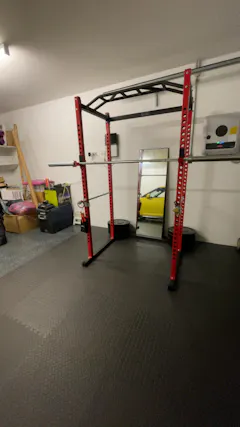
The Compact Commercial Half Squat Rack from 24/7 Gym Equipment is a professional-grade half rack engineered for high-intensity strength training in home gyms, garage gyms, and boutique fitness studios. Built from 60×60×2mm industrial-grade steel tubing with a 350kg (770lb) static load rating, it delivers the structural integrity of a full power cage with an open-frame design that allows unrestricted movement for Olympic lifting, overhead press, and functional training.
The welded H-leg base eliminates lateral wobble during heavy re-racks — the critical stability advantage a half rack has over bolt-together alternatives. Includes reinforced J-hooks, adjustable safety spotter arms, a multi-grip pull-up bar, and dual plate storage horns. Everything you need, ready to lift. Trusted by lifters across Sydney, Melbourne, Brisbane, Perth, and Adelaide.
(770lbs)
60×60×2mm industrial grade
residential ceilings
in the box
Why this half rack outperforms cheaper alternatives
Not all half racks are built the same. Here's what separates this from bolt-together budget options:
Product specifications
| Rack type | Half rack / half squat rack (open-frame) |
| Static load rating | 350kg / 770lbs |
| Steel tubing | 60mm × 60mm × 2mm industrial-grade steel |
| Height | 204cm |
| Length | 107cm |
| Width | 124cm |
| Hole spacing | Westside-style standard spacing |
| Finish | Matte black powder coat (corrosion resistant) |
| Base design | Welded H-leg frame |
| Included accessories | 2× J-hooks (with liners), 2× safety spotter arms, pull-up bar, 2× plate storage horns |
| Assembly | DIY — all tools and hardware included |
| Usage grade | Commercial and home gym |
| In stock | Yes — dispatched from NSW warehouse |
Everything in the box
- 1 Commercial Half Rack Frame Heavy-duty welded H-leg steel frame — the main structure.
- 2 2× Reinforced J-Hooks With UHMPE plastic protective liners to prevent barbell knurling damage.
- 3 2× Adjustable Safety Spotter Arms Extended arms for squat, bench press and overhead press safety — essential for solo lifting.
- 4 Multi-Grip Pull-Up Bar Narrow and wide grip positions. Also serves as a suspension trainer and band anchor.
- 5 2× Olympic Plate Storage Horns Keeps Olympic plates organised and adds base ballast for improved stability.
- 6 All Assembly Hardware & Tools Everything needed for DIY setup — no additional tools required.
Half squat rack vs full power cage — which should you choose?
The right choice depends on your space, training style, and safety requirements.
| Factor | Half Squat Rack | Full Power Cage |
|---|---|---|
| Footprint | Compact — 107cm × 124cm | Larger — typically 140cm+ deep |
| Range of motion | Open front — unrestricted movement | Enclosed — some movement limitation |
| Olympic lifting | Excellent — open design suits dynamic lifts | Limited — cage walls restrict bar path |
| Solo safety | Good — spotter arms protect failed reps | Best — full four-post safety system |
| Load capacity | 350kg (this rack) | Varies — typically 300–500kg+ |
| Best for | Home gyms, garage gyms, boutique studios, Olympic lifting | Dedicated powerlifting, maximum solo safety |
Who this half rack suits
Home Gym & Garage Gym Builders
The compact 107cm × 124cm footprint fits in a single-car garage bay or dedicated home gym room. The welded H-leg design means no floor bolting required in most setups.
Olympic Lifters & Functional Athletes
The open-front design is essential for clean and jerk, snatch, overhead press, and dynamic functional training where a full cage would restrict bar path and movement.
Boutique Fitness Studios — Sydney & Melbourne
Commercial-grade 350kg construction in a space-efficient footprint. Doubles as a pull-up station and suspension trainer anchor — ideal for PT studios maximising floor space.
Progressive Strength Trainers
The 350kg load rating and Westside hole spacing accommodate serious progressive overload training — from beginner lifts through to advanced strength work — without outgrowing the rack.
What you can train on this half rack
- Back Squat & Front Squat Primary use — J-hooks and spotter arms set for safe solo squatting at any weight.
- Bench Press (with spotter arms) Set spotter arms at chest height and use a flat bench — safe solo pressing without a spotter.
- Overhead Press & Push Press Open-front design allows full lockout overhead — unrestricted by cage uprights.
- Power Clean & Hang Clean Half rack starting position for Olympic pulling movements — ideal for technique and heavy loading.
- Romanian & Rack Pull Deadlift Set J-hooks at mid-shin height for rack pulls and deficit training variations.
- Pull-Ups & Chin-Ups Multi-grip bar — narrow grip for bicep emphasis, wide grip for lat width. Also anchors bands and suspension trainers.
- Barbell Row & Pendlay Row Set bar height for barbell rows with correct starting position — consistent rep execution.
- Band & Suspension Training Pull-up bar and uprights serve as anchor points for resistance bands, TRX and gymnastic rings.
What Australian gym owners and lifters say
"Incredibly solid. The welded H-frame makes a huge difference — no rocking at all even when re-racking 180kg squats. Assembly took about 45 minutes and the instructions were clear."
"Bought this for our PT studio in Melbourne. The compact footprint was the selling point — fits perfectly in our space. Clients use the pull-up bar every session and it hasn't moved an inch."
"Great rack for the price point. The spotter arms are longer than I expected — genuinely useful for solo bench work. Powder coat finish is holding up well after 8 months in an unheated garage."
Frequently asked questions
What is a half squat rack and how is it different from a full power cage?
A half squat rack has two upright posts at the rear with an open front — no front uprights. A full power cage encloses the lifter on all four sides. The half rack offers a more compact footprint and unrestricted range of motion at the front, making it better suited to Olympic lifting, overhead pressing, and dynamic movements. Safety is managed with adjustable spotter arms rather than enclosed uprights.
What is the difference between a half rack and a squat stand?
Squat stands are two independent upright posts with no connecting frame between them. A half rack connects the uprights with a welded H-leg base and cross-bracing, making it significantly more stable and rigid. Half racks also include integrated pull-up bars, plate storage, and spotter arms. For serious strength training, a half rack is the more secure and practical choice over individual squat stands.
What does the 350kg weight capacity include — does it include my bodyweight?
Yes — the 350kg figure is the total static load rating including the lifter's bodyweight and the loaded barbell combined. For example, if you weigh 90kg and are squatting 200kg, the total load is 290kg — well within the 350kg rating.
Do I need to bolt this rack to the floor?
For most home gym and garage gym applications, the welded H-leg base provides sufficient stability without floor anchoring. For commercial studio environments with very heavy loading or high-frequency public use, floor anchoring is recommended as an additional safety measure. Anchor bolt points are built into the base feet.
What is Westside-style hole spacing and why does it matter?
Westside spacing is a standardised hole pattern throughout the uprights — typically 2-inch (50mm) spacing in the bench and squat zones. It allows precise J-hook and spotter arm positioning and is the most widely adopted standard in commercial powerlifting equipment. It also ensures compatibility with most third-party attachments and accessories.
Will this rack fit in a standard Australian garage?
Yes. At 204cm tall, 107cm deep and 124cm wide, this rack fits comfortably in a standard single or double Australian garage. Most residential garages have a minimum ceiling height of 210–220cm, providing 6–16cm of clearance above the rack. Measure your ceiling height at the exact point where the rack will sit before ordering.
Is this rack suitable for Olympic lifting — snatch and clean & jerk?
Yes. The open-front design is specifically suited to Olympic lifting — the lack of front uprights means no restriction on bar path during a snatch or clean. The rack is used for loading and starting position work. Full Olympic lifting is typically performed outside the rack footprint on a platform, with the rack used between sets.
Can I use this rack for bench press without a spotter?
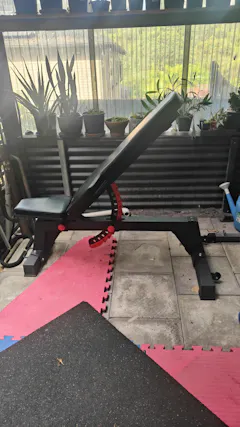
Yes. Set the adjustable safety spotter arms at the correct height for your chest level and use a flat or adjustable bench placed inside the rack footprint. The spotter arms will catch the bar if you fail a rep — making solo bench press safe. A separate weight bench is required and is not included with the rack.
How long does assembly take and are tools included?
Most users complete assembly in 45–60 minutes. All required tools and hardware are included in the box — no additional tools needed. The main frame components bolt together. We recommend two people for assembly to safely lift and position the uprights.
Heavy freight delivery across Australia
This rack ships via specialist heavy freight partners — tracked delivery to all metro and regional areas from our NSW warehouse.